
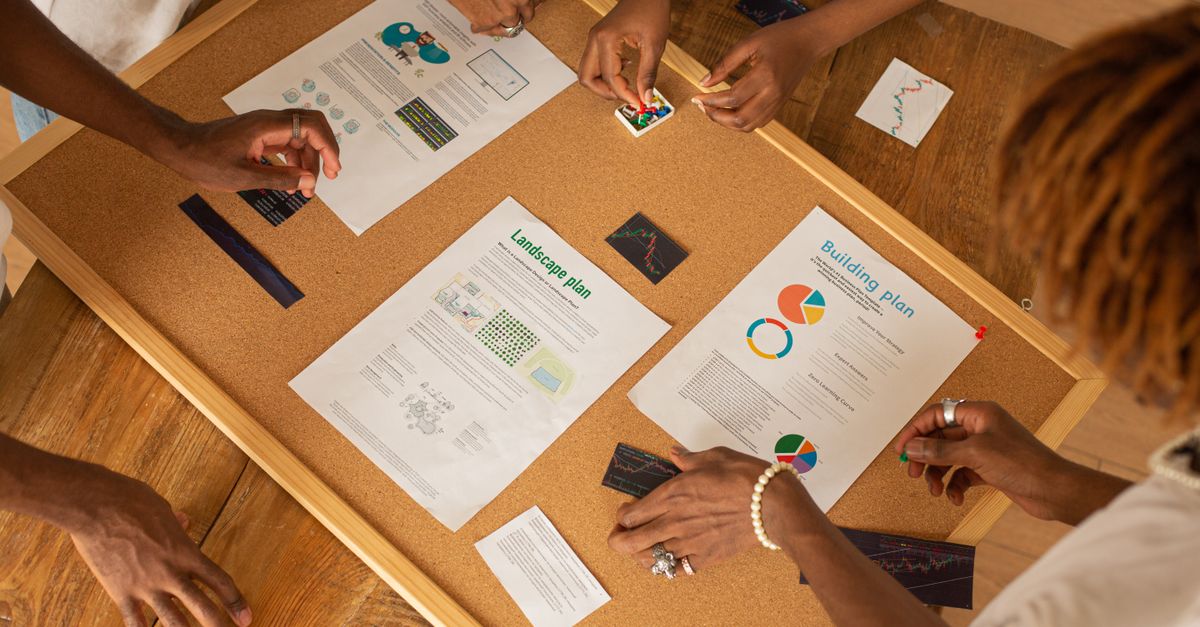
Design Thinking is a human-centered problem-solving approach that emphasizes deep understanding of user needs through iterative prototyping to create innovative solutions. This methodology fosters empathy, creativity, and experimentation, enabling teams to uncover hidden insights and generate ideas that effectively address user pain points.
The process typically follows five key phases: empathize, define, ideate, prototype, and test. During the initial empathize stage, teams gather direct user insights to understand experiences and challenges. These findings then inform clear problem statements, spark creative solutions, and guide prototype development. Through continuous testing and feedback, the iterative cycle ensures final solutions are both user-friendly and effective.
As a cornerstone of innovation in product development and service design, design thinking promotes collaboration and continuous improvement. It empowers organizations to adapt swiftly to evolving market demands while strengthening brand-customer connections through more intuitive and engaging solutions.
Core Phases of the Design Thinking Process
Take a concrete case: a small marketing consultancy wants to redesign its customer onboarding process and starts with 6,000 sessions collected from interviews and online surveys over a month. The team first immerses itself in customer feedback, actively listening and summarising pain points. Only then do they move to define precise challenges, framing actionable problem statements rather than sweeping generalities. This focused approach lets them prioritise what really needs attention.
By generating a range of novel ideas during ideation, the consultancy resists the urge to jump on the first or most obvious solution. Instead, they prototype two or three top concepts—say, a step-by-step digital guide and a personal onboarding call script. Testing these prototypes with actual clients over the course of a few weeks helps them identify which adjustments have the biggest impact, ensuring only the most effective changes are implemented.
- Begin with empathy: conduct interviews, observations, or surveys to understand user needs
- Clearly define the problem before brainstorming solutions
- Encourage many ideas in the ideation stage, even those that seem outlandish
- Build low-cost, quick prototypes rather than fully developed solutions
- Test solutions with real users, gathering honest feedback for improvements
- Iterate based on test results, tweaking or combining the most promising elements
Key Benefits for Businesses and Teams
Look at the numbers: if a medium-sized Irish tech company runs four design sprints of roughly 7,200 sessions each in a year (based on the calculation 1,200 sessions x 6), teams usually report higher engagement and breakthrough ideas compared to traditional project meetings. Clear frameworks reduce endless debate and push each session closer to an outcome valued by customers. This means sessions translate into testable prototypes and actionable services, rather than just more items on a to-do list.
Over time, the team’s behaviour starts to shift. Silos break down as groups from marketing, design, sales, and support contribute their diverse insights. The increased collaboration accelerates spotting issues and ideas early in projects, making it easier to course-correct without costly changes further down the line. Customer needs remain at the centre, ensuring the end result is practical as well as innovative.
- Promotes cross-team collaboration and reduces siloed thinking
- Drives rapid, low-risk experimentation before major rollout
- Shifts focus from features to solving real customer problems
- Encourages a safer atmosphere for sharing and testing ideas
- Builds alignment and shared purpose between technical and non-technical teams
- Boosts engagement by involving team members throughout the process
Case Study: Design Thinking in Practice
A mid-sized Irish food delivery business faced dropping customer retention and stiff competition in urban areas. Keen to address this, the team employed design thinking, starting with in-depth interviews of 7,200 urban customers over the course of seven weeks. Through these conversations, they uncovered a key customer pain point: uncertainty around delivery timing.
The business then ran a four-week experiment, developing a live order tracking feature at minimal cost. They iterated based on weekly customer feedback, fine-tuning aspects like map clarity and notification timing. Within three months, there was a 25% increase in returning users and positive reviews focused specifically on the improved delivery experience.
This approach was not without risks. The most pressing concern was that initial assumptions could skew the interview process, or that rapid iterations might dilute the core aim. To counter this, the business mandated weekly regroup sessions, ensuring decisions stayed rooted in observed customer behaviour and not internal preferences. By continually validating results, they avoided feature creep and unnecessary spend. The example demonstrates that regular user testing and agile improvements can yield measurable and lasting impact.
- Identify real customer problems through open-ended interviews
- Use low-cost prototypes to test new solutions quickly
- Collect and act on feedback throughout the process
- Schedule regular reviews to align teams around data, not gut feeling
- Guard against overcomplicating the product with unnecessary features
- Focus improvement efforts where user benefit is clearest
Common Challenges and Pitfalls
Run the maths on this: a medium-sized team invests time to generate 9,600 ideas over a typical discovery sprint. While such high output might seem promising, only a small portion of these will be actionable or aligned with customer needs. Without a sound system to evaluate and prioritise, teams often waste valuable energy pursuing concepts that don’t solve real problems. This example highlights a frequent pitfall—mistaking quantity for quality.
Teams may also fall into the trap of skipping the empathy or prototyping stages, often due to time pressure or resource constraints. When steps are rushed or omitted, crucial insights are missed. This leads to weakened solutions that rarely deliver the intended value. A common mistake is relying solely on internal perspectives rather than engaging directly with actual users, which risks building services that miss the mark.
- Neglecting user feedback during early research stages
- Over-prioritising speed and skipping prototyping
- Being influenced by internal biases and opinions
- Treating idea quantity as a measure of success
- Failing to secure buy-in across departments
- Not iterating after the initial launch
Comparison with Traditional Problem-Solving Approaches
Here is a simple example: a marketing agency working with 9,000 monthly sessions in its client’s shop website needs to boost engagement. Using a traditional approach, the team might analyse the visitor drop-off data, brainstorm internally, and implement what’s worked before. In contrast, applying design thinking, the team would start by interviewing real shoppers, generating empathy and discovering previously hidden friction points. This direct understanding often opens up new, user-focused solutions that were missed when relying on only past experience and internal data.
One key difference lies in the iterative and open-ended nature of design thinking. Traditional approaches tend to define the problem early and seek efficient solutions from a predefined set, aiming for minimal risk. Design thinking accepts ambiguity at first, using rapid prototyping and repeated testing to learn as they go. This flexibility can result in more effective outcomes, though it may feel less predictable and take more initial effort.
| Aspect | Design Thinking | Traditional Approach |
|---|---|---|
| Problem Definition | Evolving, user-centred | Fixed early, internally focused |
| Process | Iterative, experimental | Linear, efficiency-driven |
| Mindset | Embraces ambiguity, prioritises empathy | Prefers certainty, relies on expertise |
| Outcome Focus | Innovative, user-validated solutions | Proven, established solutions |
Risks emerge if teams shortcut the user research or abandon rapid prototyping. Both habits take discipline at first, so it’s wise to check that genuine customer insight is present in every stage. Sometimes, combining the strengths of both mindsets can help deliver lasting value.
